Circuit Practice and Solo

July 23rd, 2006

On Saturday the weather had started to break, the last few weeks had seen very hot weather but also a few thunderstorms. So I hoped it would not be overcast and stormy on Sunday. Caroline was up first and announced the weather to be lovely. As I ate my breakfast I had the laptop by my side and was downloading the weather reports for this area. Things looked quite complicated with a cold front to the west and heading my way.
EGNJ 230720Z 23008KT 1800 BR BKN003 18/17 Q1016
Then I got METAR; oh no!
8 knots at 230 degrees was great but 1800 meters visibility, there was no way I could get in the circuit with weather like that, but what was the forecast like.
EGNJ 230559Z 230716 23006KT 1400 BR BKN004 PROB30 TEMPO 0708 0800 FG BKN001 BECMG 0710 7000 SCT040 TEMPO 1116 9999
Well becoming 7000 meters between 07 and 10 GMT so it was worth while getting ready.

Before I heading off, I phoned the club and checked with Mel about the weather. She had a quick word with Richard my instructor and he agreed it was worth coming in as things were getting better.
Planes Parked

Once at the club house we checked the weather again, it was 3000 meters now so I went off to get Romeo Lima ready. Once through security I walked over to the grass parking area and gave Romeo Lima a preflight including checking the fuel. Once complete, I headed back to the club to check the weather, leaving my flight bag in the back of the plane. While walking back I spotted the new Diamond twin landing, quite some plane, I would love ago in her some day. Once back in the club I checked the ATIS again, visibility was 4500 meters, not long now.

So we waited, and waited. Another student arrived to try a cross country exercise, so we all waited together. Eventually it got to midday and still it was 4500 meters. I decided to call it quits and to pop back to the plane and get my bag to go. I grabbed my bag and popped into the security office to hand back my pass and went to say good bye to Richard. In the club house the other student was making one last check of the the weather before also heading home. He was planning a dual cross country exercise, Humberside, Boston to Peterborough and back. He turned the up the volume on the ATIS and the radio announced 6000 meters visibility! Wow that was a quick change. I looked and Richard and he said,
“Well?”
“Lets go!”
I shouted, I grabbed my bag and headed for the security office again to get my bag x-rayed for the second time.

Once through security I headed back to the grassed parking area. A quick preflight check and Richard joined me in the cockpit. Four primes and the engine started straight away, setting 1200 rpm I finished the after start checks and switched the radio to the ATIS. 230 at 7 knots, surface visibility 6 km and few clouds at 2000, temperature 24C due point 17C, QNH 1017. I hit the flip-flop button and called up the tower.
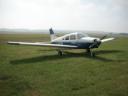
Romeo Lima

“Humberside Tower good afternoon, this is Solo02 on the grass, request radio check and taxi, I have information yankee with a QNH of 1017.”
Solo02, readability five, information yankee correct, QFE 1015, taxi and hold at holding point bravo for runway 21″
“QFE 1015, taxi to holding point bravo for runway 21”
“QFE 1015, hold at Bravo, Solo02”
I replied.

I first reduced power, pulled well back on the yoke to protect the propeller, took of the brake and then increased power. Nothing, no movement at all! I increased power some more and then more again. Slowly Romeo Lima moved forward on the grass and as she started to move I quickly reduced the power. I headed for the paved taxi way and as I approached the paved area I increased the power again to get us over the very low kerb. Getting from the grass to the paved taxiway is always a little fraught with difficulty. Once on the paved area I headed to taxiway bravo, being warned by Richard my instructor to keep the rev’s up to stop the plugs from fowling.

At the holding point I proceeded with my power checks and then radioed the tower.
“Solo02 ready for departure.”
“Solo02 line up runway 21.”
“Line up runway 21”.
I answered back.

Take Off

Like many times before I swung round and lined up on runway 21. Checking my compass with the DI, I made a small correction and then Tower gave me clearance to take off with a left hand turn out. With no flaps and full power set we accelerated down the runway. I kept glancing down at the instruments, checking that the speed was increasing, and that the engine temperatures and pressures were all in the green. At sixty knots we left the ground and we were back in the sky. The speed was a little low, and Richard reminded me we should be climbing at 80 knots. I lowered the nose to increase speed and then at 500 feet I made the normal left turn. I carried on the climb until I reached 1000 feet. Then lowering the nose I let the speed increase then reduced power to the cruse. I looked out to the left and once my normal marker the grain bins disappeared under the left wind I made a left hand turn onto my downwind leg.

I made the downwind call and then made my checks, I was a little slow so Richard prompted me. BUMFFICHHLC. With the checks complete I turned onto base and started my descent, I was a little late, so it was carb heat on, reduce power, speed in the white arc of the ASI, then two stages of flaps. I then turned on to final, made my radio call, and assessed my approach. I was still too high so reduced my power some more. The trick on the approach is to find the numbers written on the start of the runway then chose a point on the lower third of the runway. Once you have lined everything up you keep the numbers at the same point in the windscreen. If they start to go up then your descending to quick so increase power. If the numbers go down then your not descending quickly enough so you reduce power. Over the last couple of weeks I had read and re-ready the approach procedures. I soon got my height right and the approach continued well. At 200 feet Richard turned off the carb heat for me, I flew Romeo Lima down to 10 feet and then leveled off. Reducing the power the I slowly brought back the yoke and we touched down. Better then average. Richard removed the flaps I had set and I increased power to full, take off!

Engine Failure after Take Off

On the turn to the crosswind leg Richard pulled a EFATO (engine failure after take off) I quickly established a glide and picked a field, then started to go through my checks. To slow said Richard but at least I was well set up for the landing in the field. I climbed away and got set backup in the downwind leg, making my calls. This time I was second to traffic, a helicopter, which I just could not spot. At the end of the downwind leg Richard finally spotted the helicopter and we made a right hand orbit. After two orbits we were cleared to proceed to final. This I did and went on to make a reasonable landing. Once more we took off, and again just as I was about to turn on to the downwind leg Richard declared a EFATO. I again established a glide and while turning into wind, went through the engine failure after take off check list from memory. After I had gone through the touch drills (where the pupil only touches the controls and does not actually move them, eg turning off the fuel supply!), Richard asked me where I was going to land, I pointed out the field I was heading for and Richard said that was fine and let me have power back. Wow, that was a first a well executed EFATO, normally there just only just acceptable. The in the downwind leg Richard told me to declare a full stop landing. I made a reasonable landing and taxied back to the apron. Richard gave me a few words of advice then said, off you go, try three landings on your own. Just what I had been hoping for. Captain Richard E Brown back in command!

Solo

As with all my over solos (all three of them) I started back at the beginning and checked the weather on the ATIS. Making a note (it was the same as before), I called the tower, but before I pressed the mike button I recited what it was I wanted to say. Once sure I had it right, I pressed the mike button and said,
“Humberside Tower good afternoon, this is Solo02 on the apron, request radio check and taxi, I have information yankee with a QNH of 1017.”
“Solo02, readability five, information yankee correct, QFE 1014, taxi and hold at holding point bravo for runway 21”
“QFE 1014, taxi to holding point bravo for runway 21”
“QFE 1014, hold at Bravo, Solo02”
Interesting, the QFE was slightly lower this time but the QNH was the same. Oh well no time to worry, with clearance given I again taxied to holding point Bravo and went through my power checks and take off checks, once complete it was back on the radio again, “Solo02, ready for departure”
“Solo02, line up and wait runway 21.
I swung round, and pulled onto runway 21 just in time to here the controller give clearance to a jet to continue on final. Oops! I hope they were going to get me moving sooner rather then later. I had nothing to worry about. The tower came back on the radio and gave me clearance to take off for a right hand turn out.

Acknowledging the clearance, I took a deep breath and released the brakes. I slowly increased the power, once I had pushed the throttle fully forward, I glanced down to start my checks. First checking the airspeed, yes it was climbing I announced out load to myself. Looking out I said out loud,
“Track the centre line”
Then it was a glance back at the instruments, checking the engine temperatures and pressures. They were all in the green. Looking out again it was a little more right rudder to counter act the the power. The take off speed of 60 knots had soon been reached so I pulled back on the gently on the yoke and we took off. YES! Flying again. In command. I concentrated hard on maintaining the runway heading and keeping the climb attitude a little lower then normal, as the speed slowly increased to 80 knots I raised the nose a little more to maintain that speed. I glanced down at the altimeter and as we reached 200 feet I checked the flaps (I had not used any) and that the landing light was off. I maintained the climb until I reached 500 feet then had a good look round for the cross wind turn. Looking first right then left (was that the right way, must check the book!) I made a gentle turn to the left, making sure it was not too steep, this was not a good place to stall. As the runway appeared over my left shoulder I leveled off the wings and came out of the turn. I had rolled out a little early so not to get blown downwind with the 7 knot wind. I started then looking out for my next marker, some grain silos down on the left, whilst I kept up the 80 knot climb and also kept an eye on the altimeter. Without an instructor on board the climb rate was much better and just as 1000 feet came up, I lowered the nose to let the speed increase before reducing the power back to 2300.

Now where was that grain silo. No where to be seen. My position looked about right and I was betting it was hiding under the left wing, trying to confuse me. I made my left turn, this time steeper then before as I was no longer climbing, and as I turned the grain silo popped into view, yes I had turned at the correct position. One good thing about left hand circuits on runway 21, lots of good landmarks. I had a quick look at the DI to make sure I was parallel to the runway and then made my radio call.
“Solo02, downwind for touch and go.”
“Solo02, report final runway 21.”
“Report final Runway 21”,
I replied, that was a releath, cleared to finals and no worries. I quickly but correctly read out all my downwind checks and checked again that I was at the right height and right direction. I was a little to far to the east but then I was also heading ever so slightly towards the runway so nothing to worry about. Time to enjoy the flying and start looking for my next reference point, a small lake which I normally pass over and a small quarry which I turn towards for base leg.

Just as I started my turn onto base, I head a helicopter announce that it was going to try a practice engine failure. Tower warned them that I was in the circuit and gave them permission to go ahead, but first asked them if they wanted to turn left hand to right. They declared they did not mind and so the tower told them to go left as I was currently on a left hand circuit. Oh great! I started keeping my eyes peeled for them. What would we have all done if they had gone to the left!
Once turned fully onto base I assessed by position and decided it was time to start my descent. First carb heat on, then I reduced power to 1700 rpm and positioned the nose to give me about 80 knots, gradually the speed started to reduce, once in the white arc of the ASI I put on the first stage of flaps. Satisfied with my descent I concentrated on making sure my speed came down to 80 knots and stayed there. As I had leaned the hard way through many bad and misjudged landings getting the approach speed right at the start was a major factor in a good landing.

In no time at all it was time to turn to final, as I made this final turn, the radio bust into life and a jet on the ground was chatting with control, I hoped they would shut up soon, and as soon as was appropriate I jumped in and announced.
“Solo02 final for runway 21.”
I was cleared to land and given instructions to make another left hand turn out. Once all lined up I engaged second stage of flaps and maintained my 80 knots. At 200 feet I turned the carb heat off and just increase power slightly to over come a little sink that had developed. Once over the fence I reduced the power nearly all the way and leveled off at about 10 feet above the runway and then removed the remaining power. Keeping straight with the rudder I tracked the centre line and gradually pulled back on the yoke, not too far so as to not to balloon but to prevent any more decent. The speed slow came down and just as the stall warning started to come on the main wheels touched down. I kept the nose wheel off as long as I could but a few seconds later it came down to. Very nearly a perfect landing and the best landing for a year! Now thats how to fly a plane! Feeling extremely pleased with myself I removed one stage of flaps and increased power back to full. Within moments we had reached 60 knots again and I was back in the air in command of Romeo Lima.

Second time round

This time things were far more interesting!

On to the down wind leg, things were similar to before except my positioning was even better, and I was maintaining height and position well. When I made my radio call I was warned of traffic and that I was number 2 and to report ready to turn for left base. I started to look out for the traffic. I was well downwind went I hit the radio button and announced.
“Solo02 traffic sighted.”
A jet full of holiday makers returning home was on final. I was then informed to make a right hand orbit, Wheee! Round and round we go. Making sure to increase the power I practiced a few gentle and a few steep turns. Keeping a good look out on where I was.

Tower came back on the radio to be and cleared me for final but warned me about wake clearance, 6 nm. I had just read this week about a student who got into trouble when getting two close to a jet and nearly lost control. I decided to make once last orbit then turn on to base. Once on base I waited quite a while before setting up my decent, this was going to be a long final. Finally (sorry for the pun) I made my turn and declared,
“Final Solo02 for 21, touch and go.”
“Solo02, Continue approach.” was there reply.
Suddenly I started to lose forward visibility, a shower of rain came down from a cloud parked above me on final, there was no sign of rain anywhere else, and I leant forward and peered through the wind screen. No wipers on a PA-28! I spotted movement on the runway, the jet had turned around and was now facing me on the runway!

Lower and lower I came, popping out from under the cumulus cloud that was giving Romeo Lima a wash, and just as I started to get ready to remove the carb heat and go round they turned off the main runway and onto a taxiway. Tower announced I was cleared to land and with a shock I suddenly realised the carb heat was not on! I must have not turned it off on the downwind check as I was distracted by the order to orbit. I double checked it and put it on for the last few hundred feet then turned it off. As I rounded out at ten feet I let the aircraft drop onto the runway without first getting rid of the excess speed, down the main wheels touched and with a squeal of rubber we bounced back up in the air. I caught us and held us a few feet of the runway, letting the speed drop then with a little heavier then normal landing we were down.

In no time at all we were back in the air for my third and final circuit. This time I double checked every check and we had a clearance for landing without having to wait.

A reasonable landing was made and I taxied back to the south apron. Today I thought was a day to feel well proud of.

Sad news

It is always sad to hear of a plane crash, and I heard when back in the club house, a student from a club down south crashed and died on his second solo. Everyones thoughts and prayers go out to his family. Flying is a dream and throughout its history many have paid the ultimate price. We take our lives and the lives of those around us in our hands every time we takeoff.

We continue as do many others, to live the dream, and have our dreams take flight.
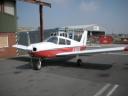
A Good Day in the Circuit

July 15th, 2006

Another lesson in the circuit planned for today, and I was hoping for better weather than last week.

The alarm went off and I grabbed the laptop from off the bedroom floor where I had left it, (no sense getting out of bed if the weather is no good!) and started to download the TAF’s, METAR and latest forecast. The weather did look better then last time;
EGNJ 150720Z 07009KT 9999 FEW020 16/12 Q1034
As you can see only 9 knots but at 070 it would be unlikely that I would be using the main runway. It was the cross wind that I struggled to cope with last week.

I was soon on my way and I kept thinking about the circuits from last week and how bad they were. Once at the club, Richard my instructor sent me off to check out BAFU (or to give her full name G-BAFU). BAFU looked very smart in her new red and white paint work, I had not flown BAFU (an old Cherokee) since 23rd October 2005 and I spent the first few minutes getting used to the controls which are different to all the other PA-28’s.

Bafu's New Paint Job

With the checks complete, and with me and Richard strapped in, I started the engine. As soon as the engine burst into life I started the next set of checks; starter warning light off, temperature and pressures in the green. Once all these checks were complete it was time to get the latest weather. I tuned the radio to the ATIS, 124.12 and started to listen and make notes. Surface wind was now 100 degrees at 9 knots and the weather CAVOK! Just what the doctor ordered. I retuned my radio to the tower, 124.90.
“Humberside Tower good morning, SOLO02 outside the hangar, request radio check and taxi, I have information India with a QNH of 1034”
“SOLO02, readability 5 information India correct, QFE 1031, your cleared to line up on runway 09 via Alpha to commence your power checks.”
“QFE 1031, line up runway 09 via Alpha”
I repeated back.

We both noted the time, and with the clearance to proceed, I reduced the power, took off the brake, then it was power back up and we gently accelerated up to a quick walking pace. First the difficult part, “Alpha”. Now where was that and did he mean for me to actually get onto runway 21 via Alpha, to get to runway 09; had what he said meant I had permission to use runway 21 as a taxiway. He had said runway 09 via Alpha, so I headed off to Bravo as point Alpha was not somewhere I had gone very often then I spotted Alpha to the right. As I came up to the holding point I asked Richard if I could actually cross over the line and onto runway 21, Richard confirmed I could, so using runway 21, the main runway of Humberside International Airport as my own personal taxiway I headed off, to line up and start my power checks. After the checks I got on the radio and announced I was ready for departure. Clearance was soon given and off I went. It had been a long time since I had flown from runway 09 and there are not many landmarks, but I maintained a reasonable circuit. The first landing was not too bad and much better then the ones last week. After first fixing the numbers in my windscreen and holding them there with the power, I switched to looking further ahead to give me better height and depth perception in the last 100 feet, this was something I had re-read in my training manual in the previous week. Richard said the only problem with it was that I had rounded out too low. Oh well not a bad first attempt, and it certainly improved my confidence.

Flaps to 0 and full power again, we soon took off from our rolling start, and it was round again for a second attempt. Second landing I tried rounding out earlier, too early it seemed and then as I flared too high we came down to earth with a hard bounce onto the runway. Once again we removed the flaps and took back off.

Third was about right, descend to about 10 feet over the numbers, reduce power all the way and just wait for the speed to bleed off, as the plane starts to drop, pull back on the yoke, holding the nose wheel and the aircraft off the ground as long as possible. Finally the main wheels touched down and the nose wheel followed. Not perfect, I had not used enough rudder and we had drifted to the right of the centre line with the slight cross wind but the best landing of all year! From then on they were fairly consistent. After six landings in total we called it quits for the day. All in all a good days flying and Richard says that it was good enough for me to go solo again. Lets hope the weather still holds!

A Bad Day in the Circuit

July 9th, 2006

Well today I would get up to speed with my landings. It would be a late start as I was booked for an afternoon lesson so that I could at least have one lay-in during the weekend.

The weather looked good, but the TAF’s forecast the wind getting up. While having my first fresh coffee of the day the phone rang. It was Mel, could I get in as soon as posible, they had just got an updated weather report and things were closing in fast. Currently 9 knots and nearly straight down the runway but it would get worse and soon!

A super fast shave, shower and dress, then it was jump in the car and off. An hour later and I was in the club house meeting Mel and Richard. Once again I would be in the new plane, G-GALB.

Once through security I found the plane just outside the security office and started my pre-flight. By this time the cloud had started to roll in and a gusting crosswind had started, about 20 knots. While still finishing the outside checks it started to rain. Great, this was not going to be an easy re-introduction to the circuit.

Starting the plane after the internal checks, I got cleared to holding point Bravo. In all my times here I think I have been told to hold at Bravo 99% of the time. Setting the QFE on the altimeter I questioned Richard about the setting. At the start I had set QNH which should have shown 120 feet but was a lot lower. Once I set QFE which should show height above ground ie 0, it should about -150 feet! We decided to ignore the QFE and set it so that it did read 0. Richard made a note to have it checked and I made a note of the time 11:55 and hand-brake off.

Following the yellow taxi line I headed off to Bravo, but before we got up to much speed up I tested the brakes and then swung off to the right and then back to the left, checking that the DI (Directional Indicator) and turn indicator. Once at the holding point I commenced my power checks, then called the tower and waited for clearance. This was soon given so I lined up on Runway 21 checking the DI again and then increased the power to full.

Out loud I made my checks.
“Speed increasing.”
“Track the centre line.”
“Engine Temperature and Pressures in the green.”
“Track the centre line.”
“Pull back on the yoke to protect the nose wheel”
“Track the centre line.”
“Speed increasing.”
“Track the centre line.”
Once we had reached 60 knots pull back on the yoke and we were in the air.

I let the speed increase to 80 knots and then raised the nose to the climb attitude, at 200-300 feet I called out flaps up, and reached down and checked the flap lever, I knew that I had not used flaps due to the length of runway 21 but I always check anyway to develop good habits. At 500 feet I made a gentle turn to the left. I carried on climbing until I reached circuit height of 1000 feet. Now I lowered the nose to the cruse position and waited for the speed to climb, after a few seconds I reduced power to the cruse setting.

Trimming for the circuit was proving difficult, it was very bumpy. I made my turn to downwind and made my radio call.
“Solo02 Downwind runway 21 for touch and go.”
“Solo02 Report final runway 21.”
“Report Final runway 21, Solo02.” I replied

I now made my downwind checks and Richard pointed out my height, 700 feet, I had lost 300 feet while I did my checks and had not noticed! I increased power but it made little difference so Richard told me to increase power to full and do a proper climb back to 1000 feet. PAT; Power Attitude and Trim, and we were soon back. It was now time to turn again and get set up the the descent. Carb heat on, power reduced and two stages of flap.

When ready I turned to final and made my radio call, I was cleared to land and also told that the wind was 10 knots straight down the runway but with a 30 degree cross wind at 30 knots!

As we approached the runway we hit a patch of bad sink, I increase power and still we headed down, prompted again by Richard I increased power to full! We stopped sinking and once past that area I reduced the power again. As we came down to the runway I leveled off to late and then flared to much causing a large balloon. I forgot to add power and did not correct the flare and Richard had to come on the controls to prevent us hitting the runway hard. Not a good start!

As the lesson progressed I slowly started to get the hang of things but the best landing of the day could only be described as bad! Lets hope I can get back up to speed soon.

After the lesson Richard did say that conditions were very difficult and it was only my third lesson of the year, lets hope I do better next week. I had booked another hour in the circuit, I must get my landings back on track or they would not let me go solo again!

General Handling Practice

July 8th, 2006

The last couple of weeks have seen wonderful weather, and today I was booked for my first lesson in six months, in fact I had booked both Saturday and Sunday.

It was a lovely day, I as soon as I had got up I had downloaded the weather reports and NOTAMS. CAVOK! Just what the doctor ordered to get me back up to speed. A quick phone call to Mel to confirm everything was to go, and I got ready and jumped in the car and went.

On arrival I met Mel and Richard and she asked how the study was doing. Now that I had passed Human Performance I had started studying for the met. So far I had only had an initial read of the book. While waiting for my instructor Richard, I took the opportunity to look at the cloud chart on the wall and study the pictures of the different types of cloud. While studying the chart I heard a SEA (Single Engined Aircraft) coming in. Looking out the Windows I saw Richard making his final approach. Mel told me to go out and meet him and familiarize myself with the new aircraft. Yes thats right. We had a new plane to play with!

Leaving the club house I walked over to the security office and got my pass to go onto the apron.

The new plane was parked on the apron, G-GALB, a low hours 1980’s PA-28-161 Warrior II. I met Richard on the apron and he was just supervising the refueling. I got in and started to familiarize myself with the controls, similar to all the other Warriors I had flown except that the altimeter was calibrated in inches of mercury and in mill-bars, something else to watch out for.

I did a slow preflight noting that I could not find the fire-extinguisher and also the landing light did not light up. I was not to worried about the latter, it was a beautiful day and anyway a number of warriors only had working landing lights when the engine is running.

My instructor Richard, came back and we strapped ourselves in. Finishing the pre-checks, I started the engine, and called for clearance and as usual was cleared to holding point Bravo. Once there I went through the power checks.

Take Off
They were soon complete and I called for clearance to take off, as normal with Richard as my instructor my call sign was Solo02.
“Humberside Tower, Solo02, Ready for take off”

“Solo02 cleared to line up runway 21”

Reducing power, I took off the hand brake and then swung the plane round and lined up on runway 21. A few moments later I was given my transponder code and cleared to take off with a right hand turn out.

Heading away from Humberside we were handed over to Radar. I retuned the radio and announced my presence.
“Humberside Radar, Good morning. Solo02 passing 1500 to 2500 feet, request flight information service.”

I was given the Barnsley QNH and a FIS was confirmed

The lesson followed the same as my last general handling lesson. first some gentle turns then some trimming practice. I trimmed for a slow 60 knots and then re-trimmed for a far faster 120 knots. Then some steep turns, 45 degrees of bank trying not to lose to much height, increasing the power and pulling back on the yoke. After that it was time for some stall practice. First a climb to get some altitude, then the HASEL checks.

HASEL
To quote the book!
A HASEL check is carried out in an aircraft whenever carrying out a maneuver that could result in the loss of control of the aircraft or when a dangerous maneuver that could affect other aircraft in the vicinity is about to be undergone. These could include stalls, spins, slow flight, spiral dives and any other air exercise that could endanger the life of others or your own.

    H

Height is the first thing to check for, which is whether or not your aircraft is at sufficient altitude to regain control before it is too late. This altitude varies depending on the aircraft and the exercise you are doing, such as a spin requires more height than slow flight as you can lose 1,000 feet in a short time in a spin, but about 500 feet in slow flight.

    A

Airframe is what sort of setting the aircraft will be in for the exercise, will there be any flaps on, landing gear up or down, or any other setting which is not related to the engine as that is E.

    S

Security, is there anything in the cockpit of the aircraft which could cause injury or damage to you or the aircraft if something went wrong. This can be removing sharp objects from pockets and placing them away, storing books in a safe location, making sure the seat belts of unoccupied seats are done up as well as making sure that passengers are all wearing the seat belt.

    E

What setting will the engine be in, will the alternate air supply or carbureter heat be on during the exercise. Will the fuel pump also be on in case the drive shaft to the mechanical fuel pump gets broken, this is just making sure that the engine will still work after the exercise is complete making sure you have power if you need it.

    L

Location and look out, are there any aircraft above you, below you or nearby that could present a problem. Also make sure of your surroundings, that you are not over a largely populated area in case something does go wrong and you lose control.

When I got the ‘L’ of lookout I made two sweeping turns, one to the left and one to the right. With no traffic in sight, I asked Richard to demonstrate a stall. First putting the carb hear on, he gradually removed all power while continuing to pull back on the yoke. With the nose pointing high in the sky, the stall warning went off then the aircraft started to buffet, and finally the wings stalled and the aircraft commenced to fall out of the sky! Richard lowered the nose and increased the power, while turning off the carb heat. The speed increased and the plane started to fly again, leveling off and reducing the power to the cruse we were in a normal level cruse. Now for my turn.

First checks again, then carb hear on. Slowly reducing the power I raised the nose, higher and higher. The left wing started to drop and I tried to correct instinctively by using the ailerons, I was quickly admonished by Richard! Exactly the wrong thing to do and exactly the right thing to do to make it worse and to take the plane into a spin! I centred the yoke and used the rudder instead. The plane wobbled first left and right as I chased the wobble with the rudder, I was making things worse. I took my feet of the rudder peddles and things started to calm down, using the rudder again I got the plane stablised, and carried on pulling back on the yoke. The stall alarm went off and the plane started to fall out of the sky. I lowered the nose and increased the power, then reached over and turned off the carb hear to increase the power some more. As the speed increased the plane started to fly and I leveled off.

That was not very good, I could easily have lost all control. Time for another go. Climb back up, full power, raise the nose till the speed stablised at 80 knots and waited until we had got back the height I had lost. Once there I lowered the nose and let the speed climb, then reduced the power to the cruse. Time for another go. First the HASEL checks again and then time for a stall. This time it was much more controlled and I recovered with very little height lost.

Rejoin
It was now time to head back and practice a few landings. I made a slow turn to the east and spotted the river Humber, with the river on my left I headed east. I spotted the cement works in the distance a useful marker as EGNJ or Humberside Airport was next door. I then got onto the radio and and asked radar for a rejoin.
“Humberside Radar, Solo02 request rejoin via Elsham.”
Radar acknowledged my request and told me to approach right base for runway two one. As I approached Elsham I asked Richard to confirm that it was Elsham I was headed for. Richard concurred and then Radar handed me over to Humberside Tower.
“Humberside Tower, Solo02 near Elsham positioning for runway two one, right base.”
As you can see I had been revising my radio calls as well as human performance and weather. Humberside was busy with traffic and told me to hold at Elsham. I spend the next 10 minutes flying in circles around Elsham while waiting for landing slot. I feared and was right that there would be no time for a touch and go.

Finally Humberside Tower got back to me. “Good morning, Solo02 Cleared to final runway 21 via right base”.

I positioned for right base and started my approach, carb heat on and power reduced for a gradual descent. I was number one to other traffic and was asked to tighten my approach to speed things up.

Turning on to final I added to stages of flaps and came in for the landing. I flared to late and to much. This caused me to balloon and lose to much speed. Instead of increasing power I lowered the nose, Richard grabbed the throttle and put on the power, reposition us for the landing. Gently we touched down. What had gone wrong, that was my worst landing in a year, I seemed to have forgotten how to fly!t”>

I taxied my way back to the apron, and Richard parked us up near the hanger. On the good side my general flying was good! While I had forgotten some basics my flying was not to bad, the landing on the other hand I tried to forget about. Tomorrow I would spend the lesson in the circuit and try to get my landings back up to scratch.

Human Performance and Limitations

June 24th, 2006

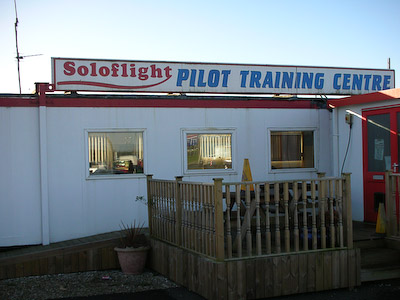
Soloflight ClubHouse

Well its been a long time since my last flight. In February I got the start of a never ending series of colds, and also conjunctivitis from some school visits I had to make for work. With the colds affecting my ears and the eye infection, it meant three months with no flying!

With all that I finally rang Soloflight and talked to Mel about restarting my training. With Mike Beecroft the only other full time instructor now left for a new job with British Airways flying a De Havilland Dash 8, lucky guy! Richard was being worked hard so had took a much deserved holiday. This meant no flying so it was time to hit the books. We booked an exam for two weeks time (this Saturday, 24th). Human Performance and Limitations! The book was actually quite interesting, how the eyes, ears and brain all work.

It was with some degree of nerves that Saturday came round. Due to my Nan dying the week before I had not revised like I should but had hit the books hard the last two days. I jumped on the BMW R1100S motorcycle and was soon at Soloflight. The exam went well and I was hopeful that I had passed.

That afternoon I phoned Mel to get my results. 95% a pass and a good one, two exams now passed! Now to start studying for the weather exam!

General Handling Practice

February 5th, 2006

Christmas was well and truly over. Several lessons had been booked and all cancelled due to weather.

This morning did not look good – EGNJ 050850Z VRB02KT 5000 BR BKN044 03/03 Q1032. But a quick call to Soloflight and Richard assured me there would be something we could do, so off I went to Humberside airport to continue my training, and my first flight of the year.

Soloflight ClubHouse

On arrival at the club Richard my instructor immediately tuned the club radio into the ATIS. The weather had not changed and visibility was still 5000 metres. Still we decided to head out over to the west and practice my general handling skills; get my hand in so to speak.

Leaving the club house I walked over to the security office and joined the queue! There seems to be a large body of air cadets going through. After signing in I asked the guard about my digital camera. Could I just carry it through the scanner or did it have to go through the x-ray machine. They told me to put it through the x-ray with my flight bag.

Romeo Lima was parked on the apron, but just past the security office a helicopter was performing its power checks, I gave it a wide birth and the pilot gave me a quick wave. Romeo Lima was the only plane on the apron so not hard to spot. I climbed up on the starboard wing and opened up the door and put my flight bag on the co-pilots seat as usual. Grabbing my check list, knee board and headset, I put the latter two on the back seat with the bag and started working through the check list.

Romeo Lima

I had hardly started when Richard appeared. He went straight to the fuel tanks and checked their contents, there was some concern that one tank might be a lot fuller then the other causing some imbalance.

With the first checks complete and the engine running I called for clearance and as usual was cleared to holding point Bravo. Once there I went through the power checks but gave extra carb heat. With the temperature and dew-point so close carb freezing was a definite risk, I did not want the engine failing during take off!

Take Off
It was time to call for clearance.
“Humberside Tower, Solo02, Ready for take off”

“Solo02 cleared to line up runway 21”

Reducing power, I took off the hand brake and then swung the plane round and lined up on runway 21. A few moments later I was given my transponder code and cleared to take off with a right hand turn out.

Heading away from Humberside we were handed over to Radar. I retuned the radio and announced my presence.
“Humberside Radar, Good morning. Solo02 passing 1400 to 2500 feet, request flight information service.”

“Solo02, Barnsley QNH1036, Flight Information Service.

“QNH 1036, Flight Information Service, Solo02.”

With that taken care of I continued my climb to 2500 feet and leveled out. First it was time to try a few gentle turns. 15 degree left then right, then 15 degrees of bank to the right. Then slightly steeper turns, 30 degree banked turns to both left and right.

Now for a little trimming practice. Raising the nose, and trimmed for a 70 knot cruise. With this done I lowered the nose and trimmed for a 130 knot cruise, this I found slightly harder. It was while trimming and adjusting the power for the slow cruise that Radar warned me of an aircraft closing to my left at 3000 feet. I started looking out while trimming the aircraft to 70 knots. Once I had achieved a stable 70 knots I finally spotted the aircraft to my left slowly overtaking me and also slightly converging on my path. While the pilot had reported himself to be cruising at 3000 feet he looked almost level, as he drew up to my position he changed course slightly to continue parallel to my path and started to climb upwards, back to the 3000 feet he should have been at! Its all too easy to let your speed or altitude change from what it should be. Often I have found myself to be 200 feet too high or too low; or 10 knots too fast or too slow. It is something that I am much more aware of now but still it sometimes catches me out.

Once I had once again got the hang of trimming I decided to try some serious turns! Banking 45 degrees, increasing the power, and pulling back on the yoke to stop us entering a spiral dive; around the plane spun. Pirouettes to the right and then to the left, round we spun. Fun in one direction but for some reason it always makes me feel sick in the other.

Rejoin
The mist was still around but there was a chance that Humberside might allow me to make a few touch and goes to practice my landing technique. Looking around I spotted the Humber bridge and from that worked out the general direction of the airport.
“Humberside Radar, Solo02 request rejoin via Elsham.”
Radar acknowledged my request. Eventually I spotted Elsham in the distance and headed towards it. As I approached, Radar handed me over to Humberside Tower together with the QFE which I immediately set on the altimeter. Thanking them I tuned the radio into the ATIS and checked the weather. Still only 5000 metres visibility but it did not look too bad now. I retuned the radio again, this time to the tower frequency.
“Humberside Tower, Good morning this is Solo02, approaching Elsham.”

“Good ‘afternoon’, Solo02 Cleared to final runway 21 via right base”.

I made a quick note about right base and started looking out for the runway. I soon spotted it and made my approach via right base.

Checks done, carb heat on and a slow decent started, Richard my instructor got back on the radio and asked if instead of landing we could perform a touch and go. As they could now clearly see us they agreed despite the weather.

Turning on to final I reported my position and was cleared for a touch and go. I was a little high so I put in three stages of flaps and down we came for a perfect landing. Off I took again.

Romeo Lima

On the downwind leg we asked if we could do a another touch and go. The Tower said yes so off round we went again.

After this second touch and go we went round once more and this time landed. All landings were perfect. The approach of the first two was a little poor, bad height control but the third was spot on.

Altogether a great session. Now I am off on Holiday. But when I come back its down to some serious training, more solo time and its time to learn navigation. Off to the book shop I think for my next training manual!

The Second Solo

May 5th, 2005

After the last lesson of practising flapless landings and crosswind landings I was glad but apprehensive about the thought of going solo again.

The weather was good and it was with the thought of going solo most on my mind I made the trip to Humberside airport. Arriving at Soloflight I had a quick chat with my instructor for the morning. The weather was fine and if my checkout flight with Captain Gibson was satisfactory then it would be a few circuits on my own. With some trepidation I went out to check out Whiskey Oscar.

My instructor joined me part way though my preflight checks. First checks complete and engine fired up, I checked the ATIS and called up Humberside tower to ask for permission to taxi. As per usual I was given clearance to holding point Bravo and a QFE for my circuits.

I was soon at the holding point with my power checks completed and once again I was on the radio again asking for clearance to take off. With clearance given I was lined up and with the word of air traffic still ringing in my ears my right hand selected full power and we were soon in the air. A quick touch and go followed a full stop landing to drop off my instructor and it was time to take command. I killed the throttle as my instructor left and once he was clear I set the throttle to give 1200 rpm.

As on my first solo I started again from the beginning. Checking the instruments I switched to Com2 and checked the ATIS. Noting the altimeter setting and ATIS code and other relevant information I switched back to Com1 after checking the tower frequency was selected.

I pressed the mike button:
“Humberside tower good morning. This is Solo04 on the apron. Request radio check and taxi. I have information Charlie and a QNH of 1012”.

I was given clearance to holding point Bravo and a QFE for my circuits. Which I promptly set.

Once again the standard routine; I reached down and reduced power on the throttle and reached down to take off the brake. Increasing power ‘Whiskey Oscar’ slowly started to move forward. Once on the taxi way I reduced power and and slid my feet upwards to cover the toe brakes. Pressing down with my toes the plane started to slow. Confident that they were working I once again increased power headed off towards holding point Bravo for runway 21. As we made are way along the taxiway I made a few left and right turns and checked the DI and turn indicator to ensure they were working.

I had soon reached holding point bravo and swung to face into the wind and started my power checks. They and the take off checks were were soon complete so it was back on the radio to Humberside to get my clearance. Once obtained it was time to line up on runway 21. So turning onto the runway I backtracked to the end before doing a 180 and lining up on the numbers. I applied the break and set the rpm back to 1200.

After lining up it was not long before I was giving clearance to take off for a left-hand circuit. With a count of three I slowly applied full power and a little right rudder to keep us on the centre line. As our speed picked up I glanced down at the fuel pressure, oil pressure and temperature, as I had be taught. Everything was still in the green, another glance at the air speed indicator showed we were coming up to 60 knots. I started to ease back on the yoke and Golf Bravo Romeo Whiskey Oscar leapt into the air and rapidly gained height. As we climbed into the sky, much faster then before without the added weight of an instructor were we soon up to three hundred feet. Feeling a little self consciousness I called out “three hundred feet”, this was the point that I would remove the flaps, but in this case I had not used any. With the nose placed just above the horizon we gradually to give us hopefully a climb speed of 80 knots, we soon reached five hundred feet and so once again I called out to myself “five hundred feet”. Looking out to both my right and my left I started my turn left onto the cross wind leg.

Lining up just to the right of a tower on the horizon, I continued to climb until we reached 1000 feet, the circuit height and once again called out “1000 Feet” just to reassure myself and Whiskey Oscar. I lowered the nose and let Whiskey Oscar pick up speed. As the speed started to increase I then reduced power to 2300 rpm. It was now time to turn downwind. So again I looked out to my right and left and then made my turn.

Soon I was parallel to the end of the runway and I made my radio call.

“Solo04 downwind for touch and go.”

And to my relief Humberside tower replied.

“Solo04 cleared to turn to final”

With my radio calls out of the way I could then concentrate on my downwind checks.

  • Brakes.
  • Undercarriage.
  • Mixture.
  • Fuel.
  • Flaps.
  • Instruments.
  • Carb Heat.
  • Landing lights.
  • Harness’s and Hatches.
  • With these complete it was time to turn onto cross wind

    Again looking left and right I made my turn. Once on the crosswind leg I turned on the carb heat and then reduced power to 1700 rpm. Changing the nose attitude to assume a 80 kt descent, I checked my speed and as I was within the white arc on the ASI to selected two stages of flaps. The nose attitude tried to change but I caught it and kept us on the appropriate decent attitude.

    By the time we had got down to 700 feet it was time to turn on to final. Checking right and left I made my turn. Once again I was lined up about to land onto runway 21.

    I made my radio call.

    “Solo04 Final for touch and go, runway 21.”

    Humberside then replied

    “Solo04 cleared for touch and go left hand circuit.”

    The decent was good and on track so I reached forward and switched off the carb heat. At this point Humberside got back in touch and asked if I could see anything to my left. They had a blip on there radar of something large closing slowly at my 11 o’clock. I could not see anything but as a precaution could I now make a right hand circuit.
    I replied

    “Affirmative.”

    During all of this I continued my approach and at 10 feet started to flare and reduced power.

    The touch down was fine and I quickly removed a stage of flap and quickly increased power to full.

    As the speed increased I glanced down at the engine instruments as I had been taught and confirmed that engine oil temperatures and pressures were still in the green. Tracking the runway centre line I kept glancing down at the instruments and when the AIS reached 60 knots pulled back gently on the yoke.

    Whiskey Oscar leapt into the air and I established a 80 knot climb. While I waited for the aircraft to reach turn altitude I kept a good lookout to my left looking out for the blip that humberside had seen on there radar.

    Once I had reached 500 feet I made a right hand turn. This now gave me a small problem. I had not done right hand circuits for many weeks and never on my own. There were few land marks to work from so I would just have to judge my eye from my distance.

    At what I judged to be the appropriate point I turned onto the downwind leg. I then started my checks. It was at this point we discovered what the blip was. A pilot coming in from the south east was warned about the blip and as they routed round it they reported on the radio that it was.

    It turned out to be large group of helium balloons!

    I completed my checks and then thought I had reached my turning point to base.

    As I completed the turn I realised that I had turned far to early and that I would not have much time to descend. Without wasting time I switched the carb heat on and reduced power to about 1600 rpm, a 1000 rpm lower then normal, and as soon as I got the speed into the white arc on the ASI I selected two stages of flaps. It seemed no time at all before it was time to turn to final.

    With the turn to final complete I made my radio call and made a very hurried touch down. That was close! Not dangerous but I had given myself very little time to get everything completed and the plane on the deck.

    Checking the carb heat, I quickly switched it off as I had missed it on the last check. I then removed a stage of flap and once again increased power to full.

    Third circuit.
    Once again I was instructed to make a right hand circuit and this time I made a mental note to give myself more room this time. The take off was simple enough and again at 500 feet I made the right turn on the crosswind leg. Leaving the turn to downwind slightly longer this time, I had reached the 1000 feet circuit height and retrimmed before I made the turn. Once the turn to downwind was complete Humberside radioed me.
    “Solo04 what are your intentions.”

    I told them that I was intending to do a couple more touch and goes before calling it a day and landing. The then informed me of a Boeing airliner on very long final making a straight in approach. This gave me a dilemma, I may be delayed because of this or could I just finish for the day and get down before the big jet!
    I decided to finish for the day and called,

    “Solo04 downwind to land.”

    Humberside tower laughed and said they would try to get me down before the jet.

    Quickly getting my downwind checks out of the way it was time to turn. This time I had left things a little late but I still had plenty of time to get set-up for a good landing.

    Just as I started to make my turn Humberside tower again called me and asked me to speed things up. At this point there was not much I could do apart from making sure I made a smooth and efficient landing. Completing my turn to final and making my radio call, I then concentrated on lining up to make a good landing. Tracking the centre line I made my final approach. At three hundred feet I switched off the carb heat. As I reached the touchdown point I kicked the plane straight with the rudder and throttled back. As I flared the main wheels gentle touched the runway and we were down. I kept the speed up and continued down the runway. I needed to get off the runway fast I had a big jet bearing down on me! Humberside tower instructed me to turn onto runway 27. As I approach I braked and swung onto what I thought was runway 27 but the tower informed me was actually runway 09, but I was fine to wait there.

    All in all an eventful day. My second time solo was a more nervous affair then my first but I enjoyed every moment of it.

    I think the lesson from this day I learn’t was to learn to use my eyes and judge distance correctly and not just rely on land marks. Those right hand circuits had forced me to use my judgement on distance, a valuable lesson for the future.

    First Solo

    April 29th, 2005

    It started out as a beautiful day with one dark cloud on the horizon. My Law Exam!

    The Plan was to revise with Liz at Soloflight, take the exam at lunch time, and then go up with Liz in the afternoon to sort out my wobbly approaches. My landings were quite good but just before touch down I would be wandering side to side and though more luck then judgement I would land with the wheels lined up on the runway.

    The Law Exam seems to be an exercise in legalise and I was very disappointed but not surprised when I failed it by a couple of percent. The day was not going as per the flight plan.

    So after lunch it was a trip up in ‘POM’ for a few circuits with Liz. This was better, she pointed out I was not being forcefull enough with the rudder. After the first landing the next two were spot on. Then the moment I had waited for. She sent me off on my own. To be honest I cannot remember much about it. But after touchdown the exhileration and happness was beyond expression. The feeling of elation lastest many days. Liz and Mel at Soloflight could hardly believe the size of my grin!

    That night lots of Champagne was drunk!